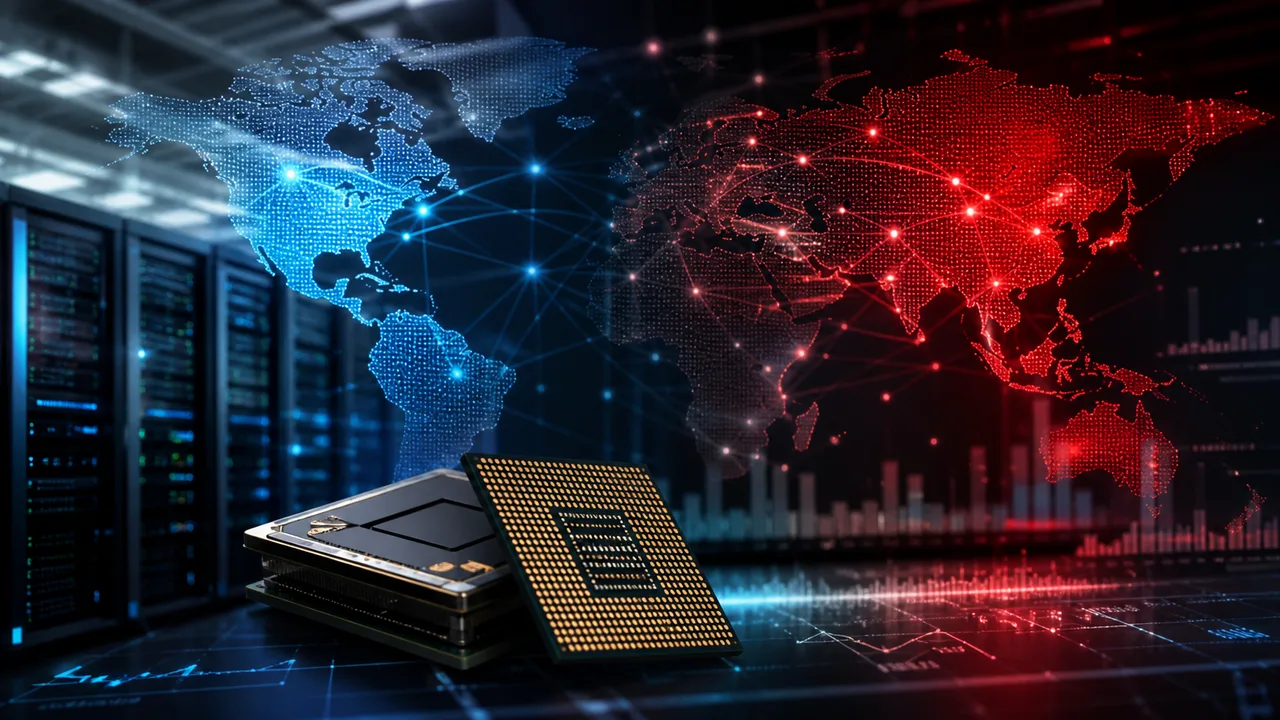
Escalating Technological Rivalry
The competition between the United States and China for dominance in artificial intelligence (AI) has entered a critical phase. Both nations view advanced AI capability not merely as a commercial asset, but as a core component of national security, economic resilience, and strategic influence. This rivalry encompasses large language models, advanced semiconductor hardware, quantum computing, and specialized AI applications.
Washington has increasingly turned to targeted export controls to restrict the flow of high-end graphics processing units (GPUs) and semiconductor fabrication equipment to Chinese firms. In response, Beijing has accelerated domestic investment initiatives to achieve self-reliance in fundamental technology stacks and hardware manufacturing.
Semiconductor Bottlenecks and Global Supply Chains
At the center of this technological friction lies the semiconductor supply chain. Advanced AI models require massive computational power, which depends heavily on cutting-edge microchips. Key developments include:
- Export Restrictions: The US Department of Commerce continuously updates restrictions on advanced computing chips and microchip manufacturing tools.
- Domestic Substitution: China is directing substantial state capital into domestic foundries and specialized chip designers to bridge the technical gap.
- Supply Chain Diversification: Global technology vendors are shifting assembly and testing operations to third countries to mitigate trade risks.
These dynamics have created a dual-ecosystem risk, where international software and hardware standards could diverge over time.
Implications for India and Emerging Tech Hubs
For major developing technology centers such as India, the intensifying rivalry presents both complex challenges and key strategic opportunities:
- Hardware Procurement: Access to high-end AI processors remains contingent on global trade rules and export compliance frameworks.
- Investment Inflows: Multinational technology companies seeking risk mitigation are expanding manufacturing and software development hubs in India.
- Sovereign AI Initiatives: Nations are increasingly investing in national AI compute infrastructure to ensure technological autonomy.
Strategic Outlook
As AI models grow more complex, the technological barrier to entry rises. The ongoing friction between the top two economies will likely shape international technology standards, talent flows, and trade governance for years to come.