Quick answer
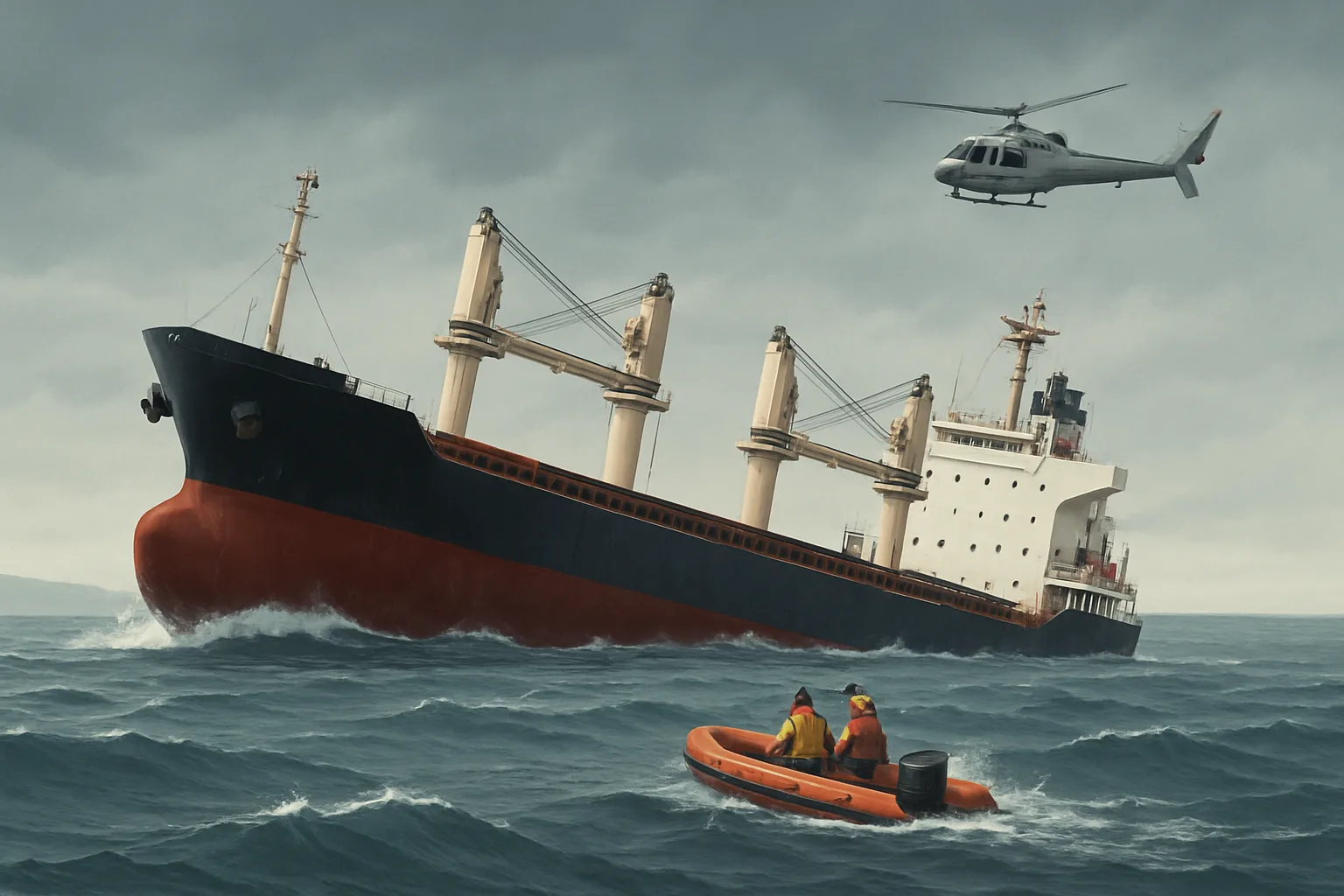
The cargo ship sinks off Odisha coast after a Panama-flagged bulk carrier, carrying 24 crew, reportedly went down roughly 240 nautical miles off the Odisha shoreline while bound for Singapore. Early reports indicate two survivors were recovered and 22 are missing; search-and-rescue operations are underway.
> Focus keyword: cargo ship sinks off Odisha coast
What happened: immediate facts and context
- A Panama-flagged bulk carrier sank approximately 240 nautical miles off the Odisha coast while en route to Singapore.
- The vessel was carrying 24 crew members at the time of the incident.
- Early reports say two crew members were rescued; 22 remain missing and are the subject of ongoing search-and-rescue (SAR) efforts.
These points reflect initial reports and are under active verification.
Search-and-rescue response and current status
Rescue agencies and nearby vessels responded to distress alerts after the ship encountered a critical situation. SAR coordination typically involves amplifying coverage by air and sea assets, and in this case, multiple assets were reportedly dispatched to the area.
- Search patterns prioritize last known position, drift modeling, and communications logs.
- Surface vessels and aircraft sweep in expanding concentric searches while coordinating with maritime rescue coordination centers.
At the time of reporting, SAR teams had recovered two survivors and continued searching for the remaining crew.
Why this location matters: 240 nautical miles off Odisha
Being about 240 nautical miles offshore places the incident outside immediate coastal waters and into the exclusive economic zone (EEZ) or beyond, depending on the exact bearing. That distance affects response times because:
- Aircraft and long-range ships are required to reach the site, increasing transit times.
- Weather and sea state can be more severe farther from shore, complicating rescue operations.
The vessel’s position while en route to Singapore suggests it was on an international coastal-to-coastal leg of a longer voyage.
Possible contributing factors (what we know and what we don’t)
At this early stage, investigators consider a range of potential causes. Without official investigation findings, the following are plausible categories rather than confirmed causes:
- Structural failure or catastrophic hull breach.
- Severe weather or sudden sea conditions leading to loss of stability.
- Cargo shift or improper cargo securing affecting vessel stability.
- Machinery failure or uncontrolled flooding.
Investigators will rely on voyage data, automated alerts, satellite communications, and any recovered voyage recorders to establish a timeline.
Environmental and navigational risks
A sinking bulk carrier poses multiple environmental and navigational concerns:
- Potential fuel and oil release, risking marine pollution and harm to fisheries and wildlife.
- Floating debris and containers present navigation hazards to other commercial and fishing vessels.
- Long-term seabed contamination if hazardous materials were onboard.
Authorities typically assess pollution risk and establish exclusion zones as needed.
Human impact and crew welfare
The immediate human toll is the most urgent concern. With two crew members rescued and 22 missing, families and colleagues face extreme uncertainty. SAR operations prioritize locating survivors and recovering those missing.
Support mechanisms for families generally include:
- Communication briefings from the vessel’s operator and maritime authorities.
- Psychological and logistical assistance through consular channels if crew members are foreign nationals.
Because manifest and nationality details vary, coordination among shipowner, flag registry, and port authorities is crucial.
Legal, commercial and insurance implications
A bulk carrier flagged under Panama falls under the regulatory framework of its flag state for certain documentation and investigation protocols. Legal and commercial issues that typically arise include:
- Insurance claims for loss of vessel and cargo.
- Liability and compensation matters for pollution damage.
- Investigation into compliance with safety and crewing regulations.
Investigations by flag state authorities, classification societies, and possibly coastal state investigative teams will determine responsibility and next steps.
Regional coordination and international assistance
Incidents this far offshore routinely involve regional cooperation. Neighbouring maritime rescue coordination centers and merchant ships in the area often support search efforts.
International conventions, such as SOLAS (Safety of Life at Sea) and SAR conventions, provide frameworks for coordinated response, and states may request or offer assistance depending on operational needs.
What to watch next
Key developments to monitor are:
- Confirmation of the vessel’s identity and voyage data from official registries.
- Updates from SAR coordinators on the number of assets deployed and search area refinements.
- Official statements about the cause when investigators secure evidence from the wreck or communications.
- Environmental assessments if fuel or cargo spillage is suspected.
Each update can materially change both the humanitarian and environmental response.
Advice for families and the maritime community
- Families should rely on official briefings from the vessel operator or designated authorities for confirmations rather than social media.
- Shipping operators should document all communications and cooperate with SAR authorities to speed search efforts.
- The wider maritime community should prioritize safety notices and provide watch assets if able.