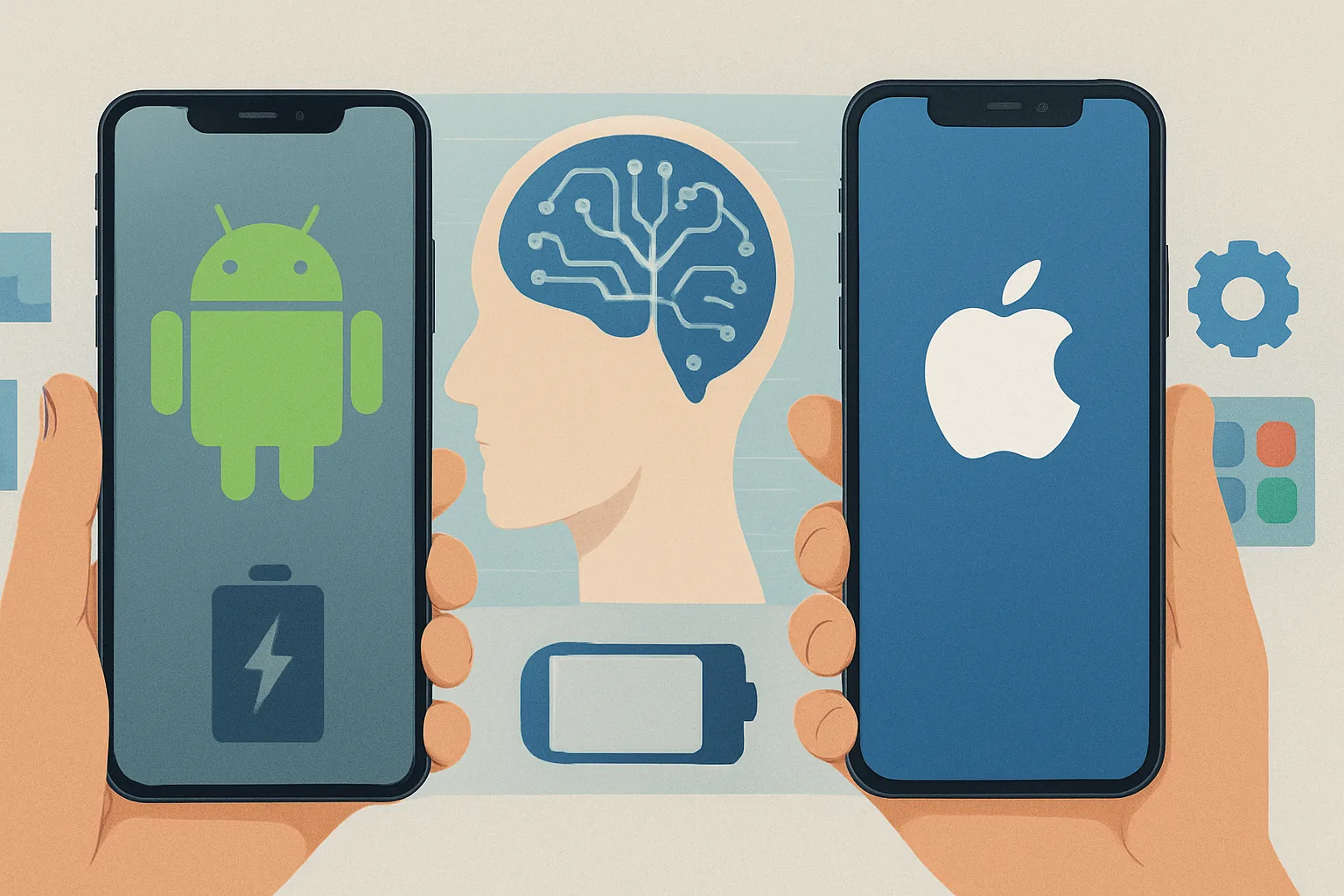
Android vs iPhone in 2026: Features, Privacy & AI Compared
The smartphone landscape in 2026 represents a major shift toward deep artificial intelligence integration, proactive privacy controls, and refined hardware ecosystems. For years, the debate between Android and iPhone focused on customizability versus seamless hardware-software integration. Today, the battleground has expanded into edge AI capabilities, user data sovereignty, and cross-device platform synergy.
Whether you are looking to purchase a new device or curious about how Google and Apple have evolved their flagship operating systems, understanding the key differences between Android and iPhone in 2026 is essential for making an informed decision.
AI Capabilities: On-Device Intelligence vs Cloud Ecosystems
Artificial intelligence is no longer a gimmick or a separate app in 2026; it is deeply embedded into the core user experience of both Android and iOS. However, Google and Apple take distinct architectural approaches to delivering smart features.
Google's Android leverages the latest Gemini models running directly on device hardware alongside cloud-based processing. Android devices excel at proactive assistance, complex context-aware automation, real-time multilingual voice processing, and advanced generative media editing within native tools. The integration allows Android smartphones to anticipate user actions based on contextual habits across apps.
Apple, on the other hand, prioritizes on-device AI privacy through Apple Intelligence. Apple emphasizes local Neural Engine execution and Private Cloud Compute for complex tasks, ensuring user data is never stored or exposed to third parties. While iOS AI features feel slightly more conservative, they excel at seamless system-wide writing tools, contextual notifications, image generation, and deeply personal Siri capabilities that operate without compromising security.
Privacy and Security: Differing Philosophies
- Privacy remains a central pillar of competition between iOS and Android in
- While both platforms offer enterprise-grade protection, their underlying business models influence their approaches.
iOS maintains a strict sandboxing environment and robust permission controls. Features like App Tracking Transparency, Lockdown Mode, and encrypted iCloud backups give iPhone users granular control over their digital footprint. In 2026, Apple has doubled down on private memory protection and enhanced hardware-level encryption against sophisticated cyber threats.
Android has closed the gap significantly with privacy features such as Privacy Dashboard, dynamic permissions, auto-reset for unused app permissions, and localized AI processing sandboxes. Android now alerts users whenever an app accesses location, camera, or clipboard data in real time. However, because Android powers devices across various price points and manufacturers, security update distribution can still vary outside of flagship Google Pixel and Samsung Galaxy devices.
Features and Customization: Personalization vs Ecosystem Harmony
When comparing everyday usability and features, Android continues to lead in customization and hardware diversity. From foldable and rollable screen form factors to extensive home screen widgets, third-party launchers, and side-loading flexibilities, Android caters to power users who want full control over their mobile environment.
In contrast, the iPhone experience prioritizes simplicity, polish, and long-term reliability. iOS offers flexible home screen customization while preserving unified design consistency. iPhone users benefit heavily from Apple's connected ecosystem, where features like Continuity, AirDrop, Apple Watch sync, and Universal Control create a frictionless experience across Mac, iPad, and Apple Vision products.
Battery Life, Performance, and Hardware Innovation
Hardware performance in 2026 sees both platforms delivering incredible efficiency thanks to advanced processor architectures. Apple's A-series chips continue to set benchmarks in single-core processing power and energy efficiency, allowing iPhones to maintain excellent battery life despite slim profiles.
Android flagships counter with diverse hardware innovations, including ultra-fast silicon-carbon battery technology capable of sub-20-minute full charges, variable high-refresh-rate displays, and specialized camera systems developed in partnership with legacy optical brands. High-end Android devices often feature superior zoom optics and thermal management for sustained heavy workloads like gaming and video rendering.
Conclusion: Which Platform Should You Choose in 2026?
Choosing between Android and iPhone in 2026 ultimately depends on your priorities:
- Choose Android if you value cutting-edge AI capabilities, flexible hardware choices like foldables, extensive personal customization, and high-speed charging capabilities.
- Choose iPhone if you prefer seamless ecosystem integration, top-tier long-term privacy guarantees, high resale value, and a unified software experience across multiple personal devices.
Both platforms are more mature, secure, and capable than ever before, ensuring that modern smartphone users receive a premium experience regardless of which ecosystem they choose.